
REVIEW · MATOBO HILLS & BULAWAYO TOURS
Khami Ruins Day Trip
Stone walls, big clues to Zimbabwe’s past.
Khami Ruins is a 16th-century stone-built capital that sits between the era of Great Zimbabwe and later Zimbabwe history, and it tells that story in place. I like the fact that this site’s structures are described as undisturbed and not destroyed by treasure hunters, which helps historians and archaeologists read the timeline more clearly.
The experience is also very practical for a half-day outing. You’ll ride in an air-conditioned vehicle, get snacks and bottled water, and spend about 2 to 4 hours on site with your group.
One drawback to plan around: admission and any fees are not included in the $80 price, and the visit depends on good weather, so it helps to keep your day flexible.
In This Review
- Key things to know before you go
- Khami Ruins: a Torwa capital written in stone
- From Bulawayo with pickup and a tight half-day plan
- Entering the Hill Complex and spotting the Mambo residence
- The dry-stone platforms: Vlei, Monolith, and Passage areas
- Narrow passageways and perambulatory galleries: how people moved
- Why Khami Ruins matters in the story of Zimbabwe
- Price and logistics: is $80 a good value?
- What the guide does with your time
- Weather, time outdoors, and what to bring
- Who should book the Khami Ruins day trip
- Should you book this Khami Ruins tour?
- FAQ
- How much does the Khami Ruins day trip cost?
- How long is the Khami Ruins visit?
- Does the tour include pickup from your hotel?
- What is included in the tour price?
- Is admission included?
- Is this tour private?
- What happens if the weather is bad?
Key things to know before you go
- A Torwa Dynasty capital: you’ll see the 16th-century center of power, not just scattered stonework.
- Second-largest stone-built monument in Zimbabwe: it’s often overshadowed by Great Zimbabwe, which makes it a satisfying detour.
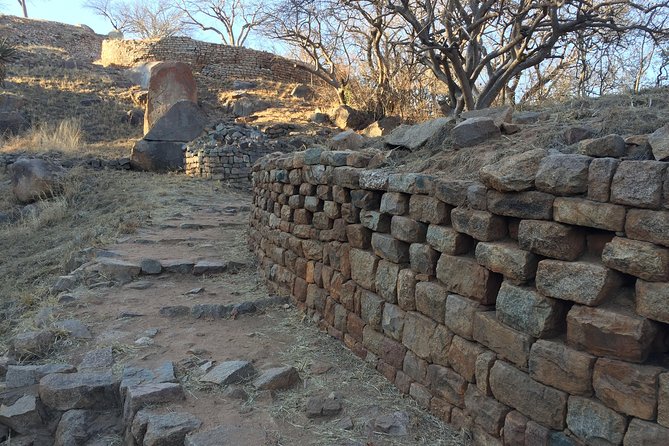
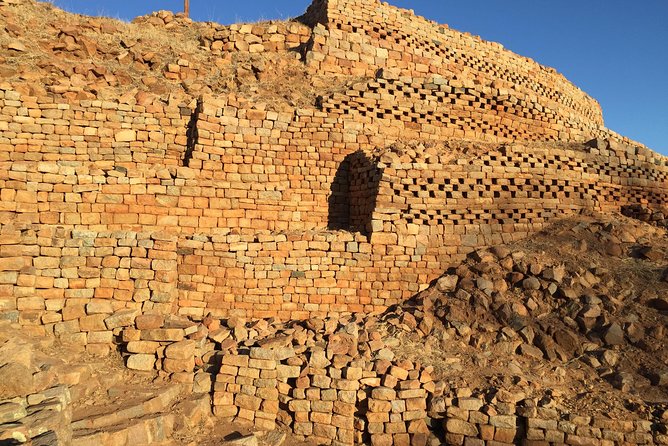
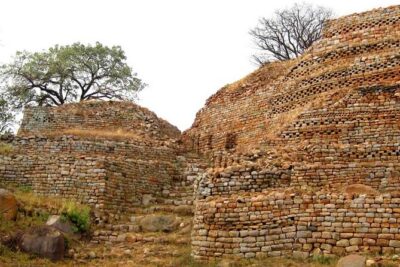
- Dry-stone engineering you can read: platforms, passageways, and decorated wall patterns make the layout easy to follow.
- Hill Complex and the Mambo residence: the chief’s home sits on the hill ruin, giving you a strong sense of how the settlement worked.
- UNESCO World Heritage Site: it’s internationally recognized, so interpretation is part of the value.
- Short, focused day trip: plan around roughly 3 hours on site, plus driving time.
Khami Ruins: a Torwa capital written in stone
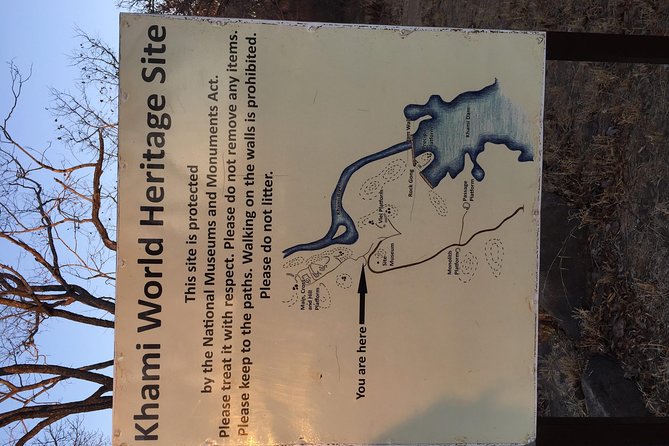
Khami Ruins is the kind of place where the architecture does the explaining. This was the capital of the Torwa Dynasty in the 16th century, and the layout shows how authority, daily life, and movement through the settlement were organized.
The stonework matters because Khami is not described as heavily disturbed by treasure hunting. That matters to you because it means you can often view the structures as archaeologists see them: with the stratigraphy and surviving features offering clearer clues about what happened and when. It is one of the few Zimbabwe sites described as undisturbed enough to provide scientists with a sharper historical picture.
And yes, it’s also recognized as a UNESCO World Heritage Site. In plain terms, that translates to: you’re visiting a major monument, not a minor stop. If you care about origins, transitions between kingdoms, and how people built power into public space, Khami is a strong match.
From Bulawayo with pickup and a tight half-day plan
You’re not crossing the country to reach Khami Ruins. The drive from central Bulawayo is often described as about 30 minutes, which keeps your day from feeling chopped up.
This outing is designed around comfort and timing. You get an air-conditioned vehicle and pickup is offered, and the trip is listed as private for your group only. Reviews also highlight that pickup is dependable and punctual, and the guiding tends to be detailed enough that you can get a full walkthrough of the key buildings and platforms.
The total duration is listed as about 2 to 4 hours. Most people naturally treat this as a half-day activity, especially because the main visit at Khami is around 3 hours. If your travel day is already full, this kind of block is useful. You get depth without losing your whole afternoon.
Practical note: admission is not included. That means you should budget extra on top of the $80, and it also means your schedule still depends on getting through any admission process smoothly once you arrive.
More days out of Bulawayo and the Matobo Hills
Entering the Hill Complex and spotting the Mambo residence

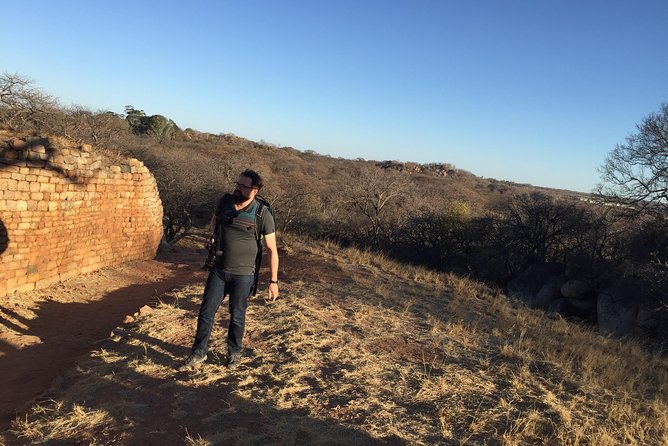
The main story you’ll follow at Khami is the hill-and-platform layout. You’re looking at a complex series of platforms made of dry-stone walled structures, with the hill area serving as the dominant high point.
A key landmark is the chief’s residence, called the Mambo residence, located in what’s referred to as the Hill Ruin (Hill Complex). When you stand on or near the hill structures, you get a sense of why leadership was placed where it could oversee the settlement and control movement.
What I love about this part is that it’s not just walls. The tour description points you toward structures like narrow passageways and perambulatory galleries, which are meant for walking routes and controlled access. These features make it easier to understand the settlement as a functioning space, not just a museum display of stones.
Look for the way the dry-stone walls create edges and boundaries. Even without being an architect, you can usually read the logic of the spaces: where people would gather, where movement would be channeled, and where the “important” structures were concentrated. That makes the Hill Complex feel like a readable plan rather than an overwhelming ruin.
The dry-stone platforms: Vlei, Monolith, and Passage areas
Khami Ruins is built from multiple platform zones, and the interpretation usually focuses on how these zones relate to everyday life and ceremony. The site is described as having features including the Vlei, the Monolith, and the Passage platforms, plus lots of narrow passageways.
Here’s why this matters for you when choosing a tour like this. If you like ruins, you’ve probably had that experience where you see stones, but you don’t know what you’re looking at. At Khami, the platform names and the way they are described suggest a structure you can follow. You’re guided toward specific components, which helps you translate what you’re seeing into a clear mental map.
You’ll also encounter wall decorations, including impressive chevron and chequered patterns. That kind of decorative stonework is a clue in itself. It signals craftsmanship and identity, not only utility. When you notice the repeating patterns on wall sections, you start to understand that decoration had meaning, even when the site’s primary purpose was political and residential.
A small caution: because Khami focuses on platforms, passages, and galleries, you should expect some uneven surfaces and stairs or steps in the ruins area. The tour data says most travelers can participate, but it’s still a monument of stone and ground that won’t feel like a smooth city sidewalk. Comfortable shoes are a smart call.
Narrow passageways and perambulatory galleries: how people moved
One of the most interesting features described for Khami is the number of narrow passageways and perambulatory galleries. These elements are easy to overlook if you rush. Slow down, because they help you picture daily movement through the settlement.
Perambulatory galleries are basically built walkways that suggest planned routes. Narrow passageways can control how many people pass, in what order, and where you turn. That kind of spatial control is common in historic capitals, but it’s especially readable when the stone walls still form the boundaries.
If you’re into photography, this is also where the ruins can feel most dramatic. Narrow corridors and patterned walls give you strong lines, and you don’t need a fancy lens to make a useful shot. Just remember, you’ll likely be moving between sections and pausing to understand what you’re looking at, so keep an eye on time.
Why Khami Ruins matters in the story of Zimbabwe
Khami’s location in history is a big part of its appeal. The site’s historical importance is tied to its position at the watershed between the era of Great Zimbabwe and the later Zimbabwe period. That makes it valuable if you like tracing transitions, not just celebrating one famous monument.
In other words, Khami helps answer a question: what changes, and what stays consistent, as power shifts between eras? A dry-stone capital like this is not only a home for rulers. It’s an architectural statement. When you compare it in your mind to other Zimbabwean stone monuments, Khami becomes a bridge in the bigger narrative.
The scientific value is another reason people come here. Since the site is described as not destroyed by treasure hunters and with undisturbed stratigraphy, it provides clearer insight into the country’s history. You probably won’t see “stratigraphy” with your eyes while you walk around, but the practical result is that what remains is coherent enough to support credible interpretation.
And the UNESCO tag adds another layer. UNESCO doesn’t just label a place. It often increases the quality of documentation and interpretation you can access on the ground, including what guides choose to emphasize.
Price and logistics: is $80 a good value?
At $80 per person, this is a straightforward day-trip price point for Zimbabwe, especially since it includes a lot of what makes tours easy to manage.
What’s included:
- Air-conditioned vehicle
- Private transportation
- Snacks
- Bottled water
That’s not a small thing. Transportation is often where value disappears, especially if you’re not traveling with your own car. Here, you’re covered with a vehicle that’s built for comfort, and you don’t have to hunt for snacks once you’re out in the field.
What’s not included:
- All fees and taxes
- Admission ticket is not included
That last line is the key financial detail. Your true total cost depends on admission and any site fees. Since the tour price doesn’t cover those, I recommend you treat the $80 as the transport and guide-value portion, then budget separately for entry costs.
Also think about timing. The trip is often booked about 17 days in advance on average, which suggests it can fill around your travel window. If you’re traveling in busy periods, booking earlier can help you avoid last-minute compromises.
Finally, remember this is a private tour for your group. If you’re traveling with friends or family, private format can feel like better value because you’re not sharing the experience with strangers.
What the guide does with your time
Even with an impressive setting, the difference between a frustrating ruins visit and a satisfying one is interpretation. The tour includes guiding as part of the experience flow, and specific named guidance has been praised for thorough knowledge and clear explanations.
Guides are the ones who connect the stones to the story you’re meant to follow: Torwa Dynasty capital, hill residence (Mambo), platform zones, decorated wall sections, and the logic of passageways and galleries.
I like this approach because you’re not left guessing. If you enjoy history, this kind of guided narrative saves you time and helps your photos look better, too. When you understand what a section represents, you take better angles and you remember the place with more clarity.
Weather, time outdoors, and what to bring
This is a weather-dependent visit. The experience is described as requiring good weather, so if conditions are poor, you may be offered a different date or a full refund. It’s worth planning with that in mind if Khami fits into your last days in Zimbabwe.
Bring your basics:
- Good walking shoes for uneven stone areas
- A hat or sun protection, since you’re outdoors
- A small bag for your phone and essentials
The good news is the tour already provides bottled water and snacks, so you don’t have to start your day out hungry or scramble for refreshments.
Also, the duration is short enough that you can plan a low-stress day around it. If you’re expecting a super long excursion, you’ll be pleasantly surprised that this stays focused.
Who should book the Khami Ruins day trip
I’d book Khami Ruins if you:
- Love archaeology and historic architecture, not just scenic views
- Want a Zimbabwe stone monument that gets attention for being comparatively undisturbed
- Are based near Bulawayo and want a manageable half-day
- Prefer private transportation and a guide-led walk-through
You might skip it if:
- You only want a place with minimal walking or standing around
- You’re tight on budget and don’t want to add admission fees on top of the $80
Because the experience is about 2 to 4 hours, it’s a good fit for travelers who want something meaningful without committing to an all-day drive.
Should you book this Khami Ruins tour?
Yes, I think it’s worth booking if Khami Ruins is on your list. The combination of private transport, air-conditioned comfort, and a guided visit makes the $80 price feel practical. You’re also visiting a major stone-built site with strong historical and scientific significance, plus it’s described as UNESCO World Heritage.
The biggest “wait, consider” item is the admission not included and the requirement for good weather. If you can handle that, you’ll get a focused trip that turns stone walls into a clear story of Torwa Dynasty power and Zimbabwe’s broader historical transition.
FAQ
How much does the Khami Ruins day trip cost?
The tour price is $80.00 per person.
How long is the Khami Ruins visit?
The experience duration is listed as 2 to 4 hours (approx.), with about 3 hours at the ruins.
Does the tour include pickup from your hotel?
Yes, pickup is offered.
What is included in the tour price?
Included features are an air-conditioned vehicle, private transportation, snacks, and bottled water.
Is admission included?
No. The admission ticket is not included, and all fees and taxes are not included.
Is this tour private?
Yes. It is a private tour/activity, so only your group participates.
What happens if the weather is bad?
The experience requires good weather. If it is canceled due to poor weather, you’ll be offered a different date or a full refund. You can cancel up to 24 hours in advance for a full refund.
More Tour Reviews in Zimbabwe





Matobo Hills and Bulawayo

Other Zimbabwe Tours in Our Notebook
- Great Zimbabwe Ruins Tour from Bulawayo with Picnic Lunch !
★ 5.0 · 3 reviews - Khami Ruins & Matopos Silunguzi Village Day Tour!
★ 5.0 · 4 reviews - Zimbabwe: Sundowner Cruise (Standard) Zambezi River
★ 4.8 · 5 reviews - Khami Ruins Day Trip
★ 5.0 · 6 reviews - Bulawayo to Victoria Falls Transfers
★ 5.0 · 7 reviews - Bulawayo Airport Transfers
★ 5.0 · 8 reviews
Matobo Hills & Bulawayo Tours, compared.
 ★ 5.0The Best of MatoboFrom $14039 reviews
 ★ 5.0Matobo Rhino EncounterFrom $12033 reviews
 ★ 5.0Matobo Hills Day Trip with Rhino TrackingFrom $14022 reviews
 ★ 4.5Matopos Half Day ExcursionFrom $12015 reviews
 ★ 5.0Bulawayo Airport TransfersFrom $408 reviews
 ★ 5.0Bulawayo to Victoria Falls TransfersFrom $5407 reviews
 ★ 5.0Khami Ruins & Matopos Silunguzi Village Day Tour!From $1454 reviews
 ★ 5.0Silunguzi Matopos Village & Rock Paintings Visit !From $954 reviews
Browse the lists this tour appears in